
Rabbits, Ostara and herbs
- The origin of Ostara
- Folklore and Traditions of Ostara
- Ostara and the Goddess Eostre
- Symbolism of the Rabbit for Ostara and Easter
- Traditional Herbs Used for Ostara
- Green Thursday and Its Customs
- Connection Between Nature and Spirituality
- Recipe for Vegan 9 Herb Green Thursday Soup
Remember the scene in Lord of the Rings when huge signal fires are lit on mountain tops, one by one? Impressive, right? You can experience something like this in real life when you stand on a mountain top (or hilltop) at Easter in the northern part of Hessen or in Thüringen, in Germany: huge bonfires are lit on a hill in each village.
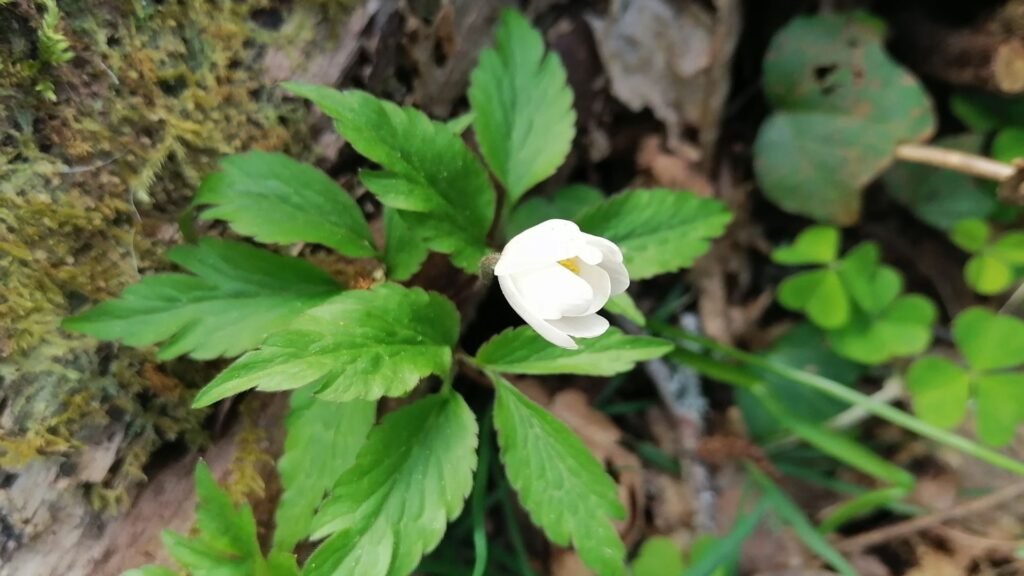
Ostara: Folklore and Traditions
Today, this custom is with the huge bonfire celebrated at Easter, but the folklore, traditions, symbols, tales, and also the places where those fires are lit (hills, often with special ancient stones and myths around them) suggest that once again, an ancient pagan festival was assimilated by Christian festivals: Ostara, a Germanic festival which was celebrated at the spring equinox. This was often done where it appeared impossible to suppress old traditions, even though they had been strictly forbidden. So, instead, they were transformed. In this case, it must have been so strong that even the name was kept.
In specific places, some still observed traditions can be found in other places at the winter solstice, St. Brigid’s/Litha, or the carnival (closer to the end of winter), such as letting burning wheels roll down a hill, which is still done at Easter in certain villages in former Germanic areas, or the blessing of fields. Another long-preserved tradition sees young women going alone at night before Easter to a stream and getting water that will be kept all year and is supposed to bring beauty and health.
Another custom that is still observed sees wells decorated for Easter with fresh green wreaths (often evergreens). The well is an ancient symbol, or even site, for Germanic fertility Goddesses and associated with childbirth. Traditions like this are clearly linked to specific Germanic fertility Goddesses in some places, namely linked to the Goddess Holle (Hel).
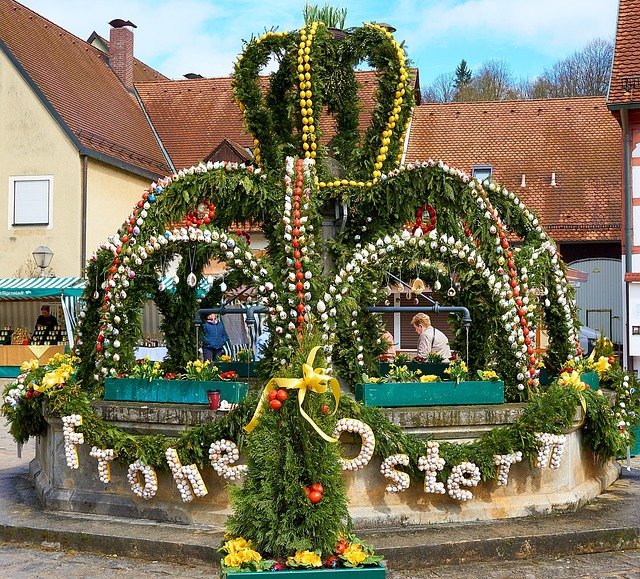
Ostara / Eostre: Germanic Goddess of Spring and Fertility
In modern paganism, Ostara is the third festival of the wheel of the year. It is a sun festival, as it is traditionally celebrated on the day of the spring equinox. There isn’t really a Celtic equivalent, as the return of light and fertility is more associated with the moon festival of Imbolc. In Wales, the Ostara/Easter holiday is called Alban Eilir or Mid-Spring, though.
It is said that the Goddess Ostara walks the Earth and whereever she steps, the ground awakens and flowers and green herbs appear.
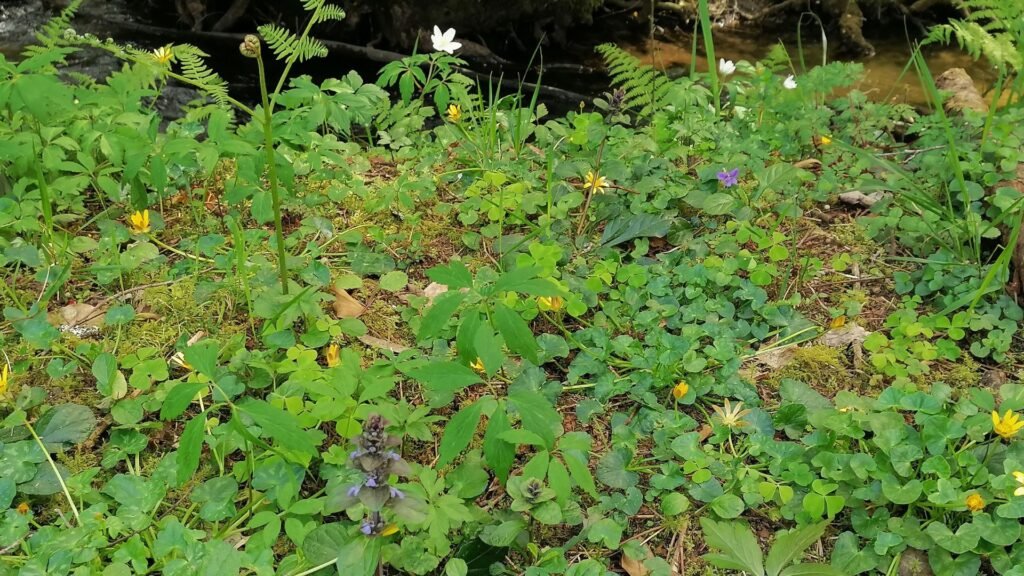
But what do rabbits have to do with it, who is Eostre, why is it now called Ostara, and what does this have to do with herbs? Well, it is all about the core of this special day: new birth/rebirth, fertility, new life.
Eostre is a Germanic Goddess of spring and fertility, and Easter was named after her—or after a later version of her, when she was called Ostara. This goes back to Germanic tribes and celebrations, mainly in central, eastern, and Nordic Europe. In Germany, the Brothers Grimm collected much folklore around her:
“Ostara, Eástre seems therefore to have been the divinity of the radiant dawn, of upspringing light, a spectacle that brings joy and blessing, whose meaning could be easily adapted by the resurrection day of the Christian’s God. Bonfires were lighted at Easter, and according to popular belief of long standing, the moment the sun rises on Easter Sunday morning, he gives three joyful leaps, he dances for joy […] Water drawn on Easter morning is, like that at Christmas, holy and healing […] here also heathen notions seem to have grafted themselves on great Christian festivals. Maidens clothed in white, who at Easter, at the season of returning spring, show themselves in clefts of the rock and on mountains, are suggestive of the ancient goddess.” (Jacob Grimm)
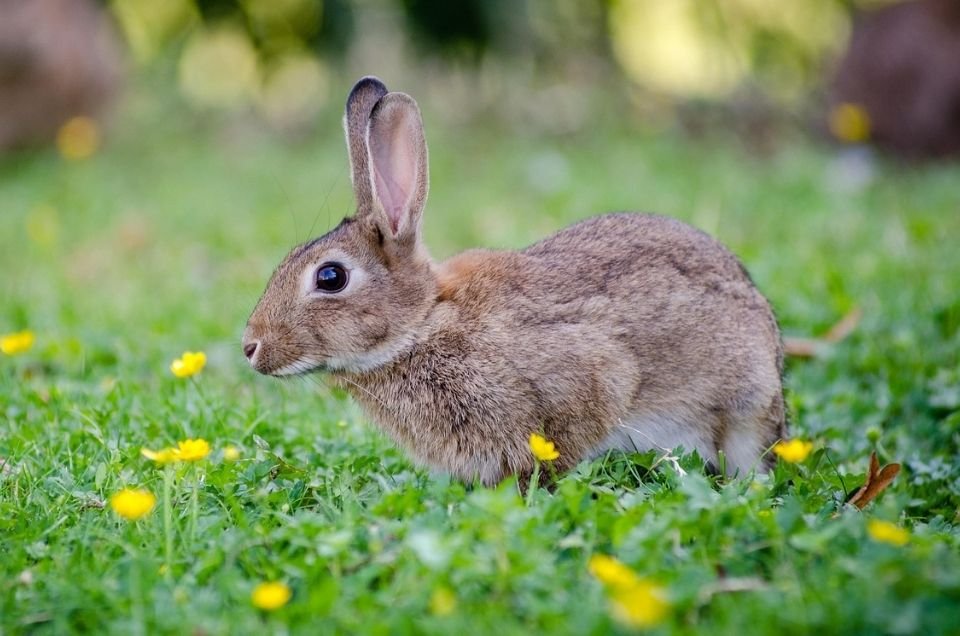
Symbolism of the Rabbit – Do as Rabbits Do
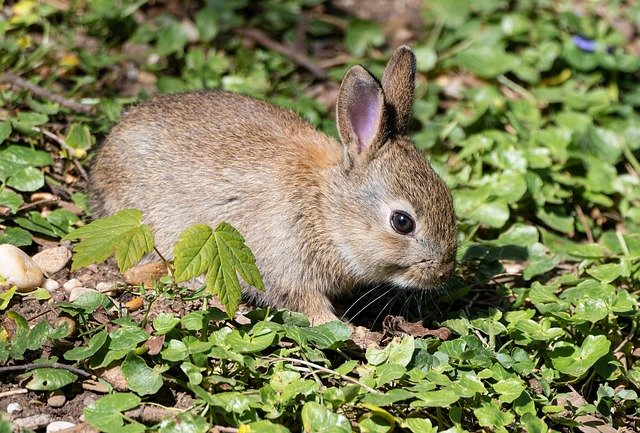
Where does the rabbit come in? Traditionally, Ostara or Eostre was depicted with a hare, or rabbit, to symbolize fertility. This spring festival is all about birth, new life, and fertility, and rabbits are an obvious choice here. The hare is one of the holy animals of the Celtic people, too, by the way. For me, personally, a special connection exists between rabbits and herbs: I got into herbalism because of my rabbits. They know their herbs well and won’t eat, for example, herbs with a very high content of essential oils, such as Yarrow or Sage. Or other herbs that are bad for them (not that I would have tried many…). I had to learn to find the herbs they loved most, that is all—mainly simple green-leaved herbs such as dandelion, clover, and so on.
The hare is also sacred to the Goddess Aphrodite. In Egyptian mythology, the hare is represented by the Goddess Wenet.
Traditional Herbs Used for Ostara
Specific herbs and plants traditionally used around Ostara have to be searched in Germanic customs and folklore, especially in areas where traditional festivities are still celebrated respecting ancient traditions. It is more about “fresh green,” it seems. We can safely assume, though, that many used for Easter today (and are also already becoming forgotten) were originally Germanic rites. One of them is palm fronds for Palm Sunday. Even those Christian palm fronds, though, are traditionally bound with young willow branches. However, in Nordic countries, the complete bunches (for the Christian version even) consist of willow, boxwood, and other young branches, and the name “willow Sunday” can be found in some places. Another tree associated with these customs is the birch.
Green Thursday and Its Customs
In Germany, until today, there is a custom on the Thursday before Easter, called “Green Thursday.” Thursday is the day of the Germanic God Donar (Nordic Thor). It is said that on this Thursday, anything fresh and green growing now should be eaten, such as leaves, wild salad, etc.
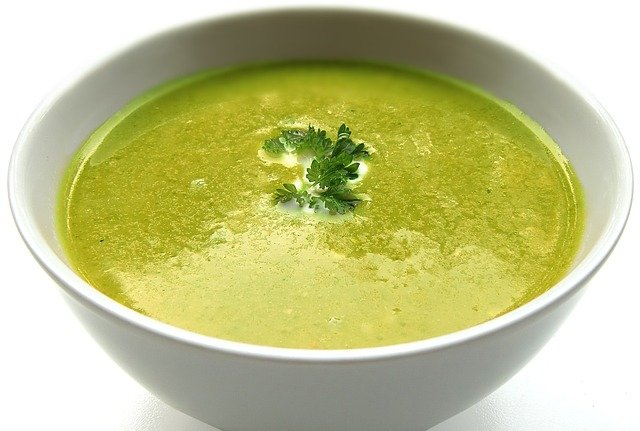
There is a special dish, though, for Green Thursday, well known in Germany and Austria: Green Thursday’s soup, or also called nine-herb soup. I haven’t found a single combination of fresh wild herbs only, though, in recipes, so basically, one uses what one gets their hands on, such as:
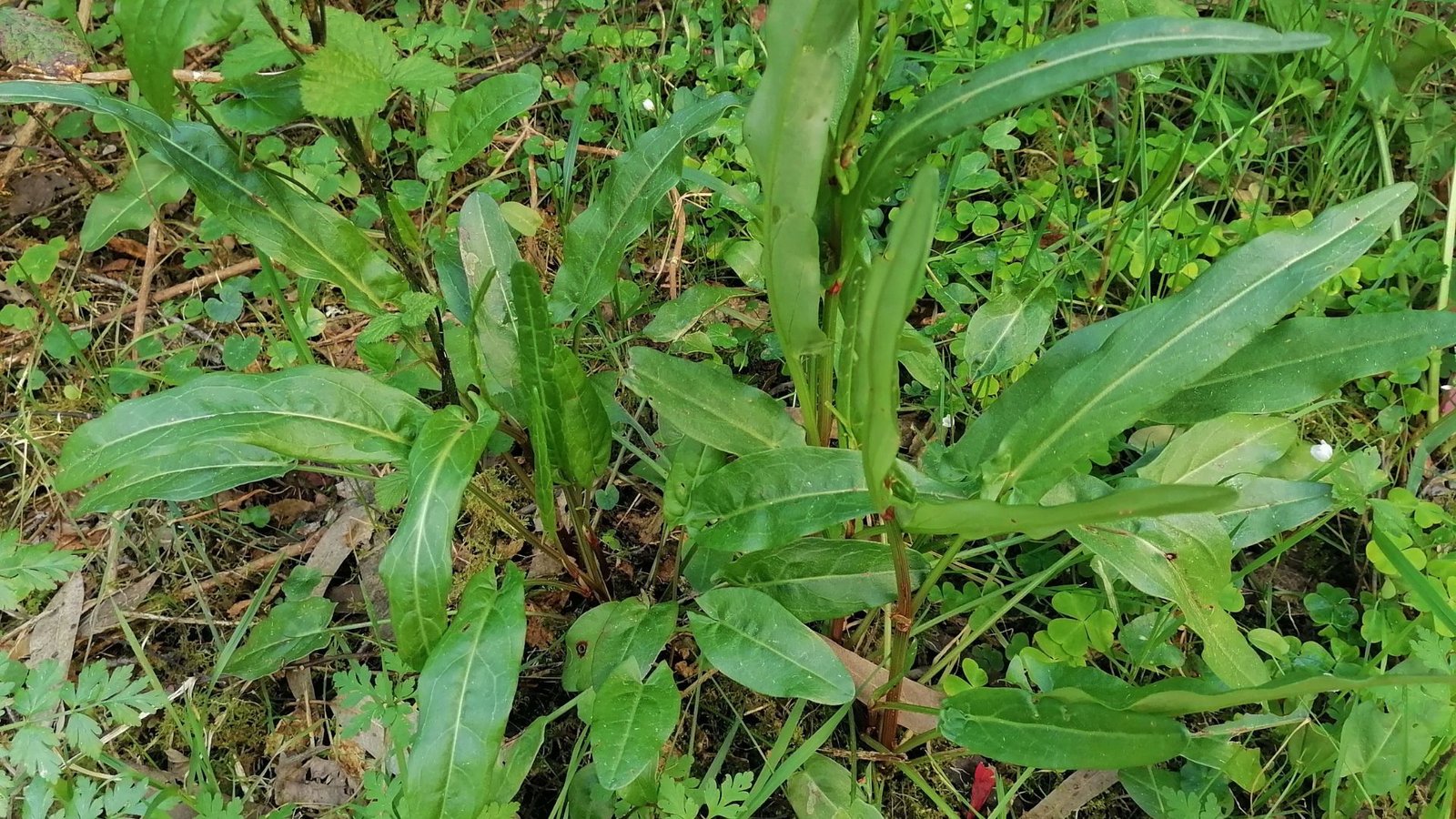
Bittercress, Ground elder, ground ivy, dandelion, wild garlic, nettle, sorrel, chickweed, daisies, and plantain.
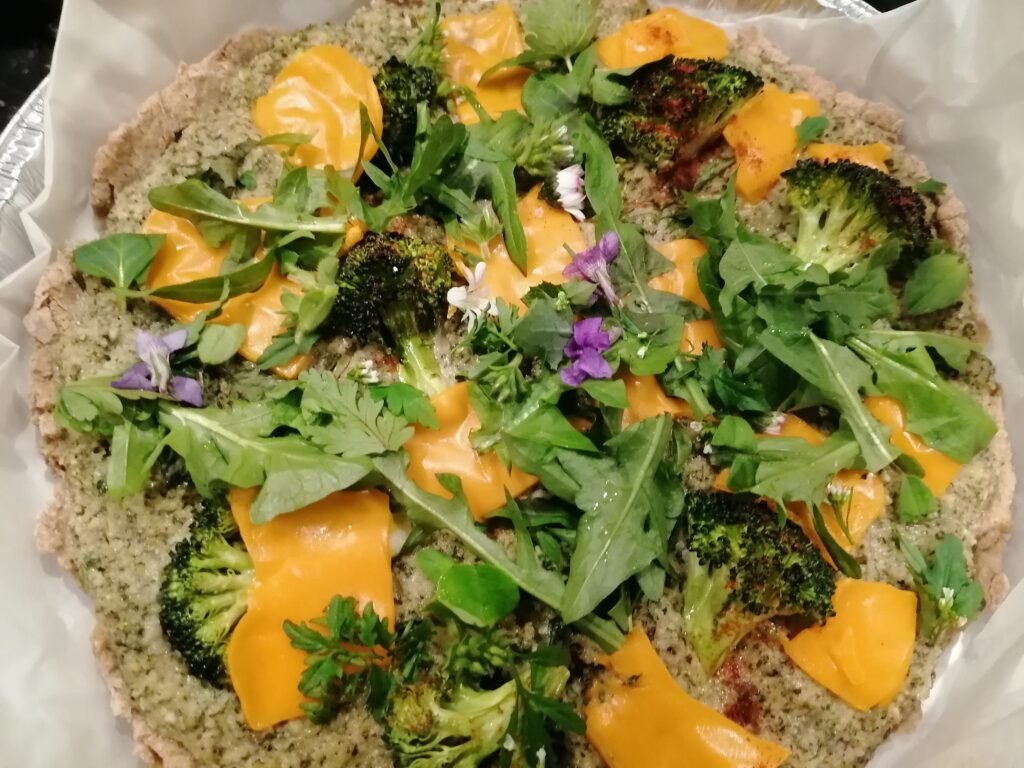
You find a recipe for a vegan Green Thursday soup below, here is a photo of what I made from fresh herbs, I collected on Ostara – a quiche (or flan/vegetable cake) made from vegan shortcrust pastry (I just use wholewheat flour, olive oil, salt) and cashew “cream” from soaked and blended cashews. I blended the cashews with nettles, sorrel, plantain (mostly), so this is the base you see on the photo. Then I put some broccoli on it, vegan “cheddar” cheese, and after baking dandelion, bittercress, violet and daisy flowers, etc. It does well with garlic (unfortunately I didn’t have wild garlic nor regular garlic), nutmeg, black pepper.
I still had a lot of dandelion left, so I made dandelion pesto: soaked sunflower seeds blended with olive oil and dandelion leaves.
Connection Between Nature and Spirituality
The role of herbs in these rituals highlights the deep-seated connection between nature and spirituality in ancient agricultural communities. Not surprisingly, many of these customs have persisted, albeit in altered forms, through centuries, maintaining relevance in contemporary practices, particularly in the realm of herbalism and nature connected spirituality.
9-Herb Green Thursday Soup
Ingredients:
- 2 tablespoons olive oil
- 1 medium onion, finely chopped
- 2 cloves garlic, minced
- 1 medium potato, peeled and diced
- 4 cups vegetable broth
- 1 cup fresh sorrel, chopped (for its tangy flavor)
- 1 cup fresh clover leaves (softened, young leaves)
- 1 cup bittercress, chopped (peppery flavor)
- 1 cup plantago leaves (plantain), chopped (mild, earthy)
- 1 cup nettles (wear gloves when handling), chopped (optional)
- 1 cup fresh parsley, chopped
- 1 cup fresh chives, chopped
- 1 cup fresh dill, chopped
- 1 tablespoon lemon juice (or to taste)
- Salt and pepper to taste
- Optional garnish: a swirl of plant-based yogurt or a drizzle of olive oil
Instructions:
- Sauté the Base:
In a large pot, heat the olive oil over medium heat. Add the chopped onion and sauté for about 5 minutes until soft and translucent. Add the garlic and cook for another minute until fragrant. - Cook the Potatoes:
Stir in the diced potato and pour in the vegetable broth. Bring to a simmer and cook for about 10-15 minutes, or until the potatoes are tender. - Add the Wild Herbs:
Once the potatoes are tender, reduce the heat and add the chopped sorrel, clover, bittercress, plantago, and nettles (if using). Stir to combine and let the herbs wilt in the hot broth for about 5-7 minutes. - Blend for Creaminess:
Using an immersion blender, blend the soup to your desired smoothness. If you prefer a chunkier texture, blend only half of the soup and leave the rest as is. - Finish with Fresh Herbs:
Stir in the chopped parsley, chives, and dill. Add lemon juice, salt, and pepper to taste. Allow the soup to heat through without boiling for another 2-3 minutes. - Serve:
Ladle the soup into bowls and garnish with a swirl of plant-based yogurt or a drizzle of olive oil if desired. - Enjoy:
Relish the delightful freshness of spring in every spoonful of this herbaceous soup!
Notes:
- Make sure to identify the wild herbs correctly before using them, and ensure they have been foraged from areas free of pollutants.
- This soup is highly adaptable; feel free to modify the herbs based on what you can find in your local area.
Enjoy your nourishing and vibrant Green Thursday Soup rich with the essence of fresh wild herbs!.